Why We Started DeepCare Labs
The biggest problem facing addiction medicine is not the treatments themselves – it’s the infrastructure surrounding care. A founder’s letter on three structural failures, and our two-phase plan to address them.
The biggest problem facing addiction medicine is not the treatments themselves, it’s the infrastructure surrounding care.
Let me explain. Many of the treatments in addiction medicine work – and they work very well. For example, medications for opioid use disorder (e.g., methadone, buprenorphine) are arguably one of the greatest success stories in modern behavioral medicine. Consistent use of these medications reduce drug craving, drug use, risk of overdose, and overall mortality. Nevertheless, approximately 80% of Americans with a substance use disorder never receive treatment. Overdose still remains the leading cause of death for adults aged 18–44 in the United States, and as of 2024, roughly 217 Americans die every day from a drug overdose. The gap between what our treatments can achieve and what our care delivery system actually delivers is wider in addiction medicine than in any other specialty I have encountered.
How I came to see this
I have spent most of my career in Addiction Medicine, first in university research settings, and then inside the treatment programs themselves. I received my PhD in human development and quantitative methods at UW-Madison, completed postdoctoral training at the National Institute on Drug Abuse (NIDA), and then – as Scientific Director and Head Data Scientist at Maryland’s largest outpatient addiction treatment provider – spent six years building and deploying clinical AI systems that now run across more than 50 treatment sites. That work placed me alongside the teams delivering care on the front line: in exam rooms, in staff meetings debating changes to treatment protocols, and in conversations discussing billing and reimbursement pressure that determined what those teams could actually do. It is here where the ideas behind DeepCare Labs – and the conviction to build it – took shape.
What we have observed
What I observed individually over those fifteen years is what our team at DeepCare Labs now sees as a structural crisis. Three interconnected problems explain why evidence-based treatments so often fail to reach the people who need them most.
Clinics cannot grow to meet demand
The economics of outpatient addiction treatment are dominated by labor. Provider costs consume the large majority of a typical clinic’s operating expenses, margins are thin across the industry, and the national supply of board-certified addiction clinicians works out to roughly one specialist for every 8,000 patients. Furthermore, reimbursement for addiction medicine frequently falls below the cost of delivering care, forcing clinics to pursue alternative funding sources, restructure their payer mix, or cut costs elsewhere – often starting with staff salaries. Clinics cannot hire their way to growth; the providers do not exist, and the economics would not support it if they did. The result is what we have observed across the industry, again and again: cap patient census, shorten visits, cut salaries, or shut down. This is not a hiring problem. It is a structural workforce crisis, and we believe it has been badly overlooked.
Care remains reactive in a disease that is predictable
Decades of peer-reviewed research – including work our team has contributed to – show that patients with substance use disorders follow distinct, identifiable treatment-response trajectories. Yet day-to-day practice still relies on protocol defaults, clinical intuition, and best-guess matching, because no digital health infrastructure exists to bring this evidence to the point of care. Clinicians too often learn a patient is deteriorating only after a lapse, an overdose, or a dropout.
Clinics operate without visibility into their own data
Health records, laboratory results, patient-reported outcomes, and billing data sit in disconnected silos. Frontline teams have no practical way to identify which patients are at highest risk for lapse, which patients are at risk for dropout, or which clinical work is going undocumented and unreimbursed. The data exists; it simply cannot be used. And even if it were accessible, most clinics lack the specialized staff to act on it.
No modern medical specialty operates with less technological infrastructure than addiction medicine. Other fields have built precision medicine platforms, decision support, and operational intelligence into routine care. Addiction medicine – the specialty confronting one of the deadliest public health crises in American history – has been left to run on outdated technology and clinical intuition.
Our mission
We don’t have to let these problems cripple the field. We believe that these infrastructure failures can be solved with a little ingenuity. We started DeepCare Labs to address all three of these problems, and we intend to do so in two phases.
Our near-term focus is the workforce. We are building clinical intelligence infrastructure designed to multiply the reach of the addiction treatment workforce – helping care teams do more of the work that only they can do. The scarcest resource in addiction medicine is not the clinician’s time – it is the clinician’s judgment. Our platform, DeepCare ATLAS, is designed to extend specialist-grade judgment to every member of the care team, expanding a clinician’s panel far past what any individual could oversee. We are not trying to replace the specialist. We are trying to put them in every room. We call this workforce acceleration, and we believe it is the necessary first step: the next new treatment doesn’t matter if clinics cannot afford to deliver care. We will have much more to say about ATLAS in the months ahead.
Our ultimate goal is precision medicine. Addiction medicine deserves what oncology and cardiology already have – clinical frameworks that match the right treatment, at the right intensity, to the right patient at the right time, grounded in evidence rather than guesswork. We will build the pre-eminent precision medicine platform for addiction medicine. The workforce problem and the precision problem are usually treated as separate. We see them as one problem. A specialty that lacks the infrastructure to address both, is unable to deploy its people or its evidence well.
Gratitude
Companies like this do not begin in a vacuum. To the clinicians, nurse practitioners, counselors, and front-desk staff who let me sit in during their day-to-day routine – thank you. You taught me how this system really works. To my mentors in research and in practice, and to the collaborators, advisors, and early supporters who pushed us to stop describing this problem and start solving it, this company exists because of your support.
And to the patients living this firsthand; you are the reason this work matters, and you are what drives us to solve these problems.
What comes next
We are early, and we are deliberate. In the coming months we will share more about what we are building, who we are building it with, and the evidence standards we are holding ourselves to.
If you run an addiction treatment program, work in this field, or simply care about closing the treatment gap, we would like to hear from you.
– Albert
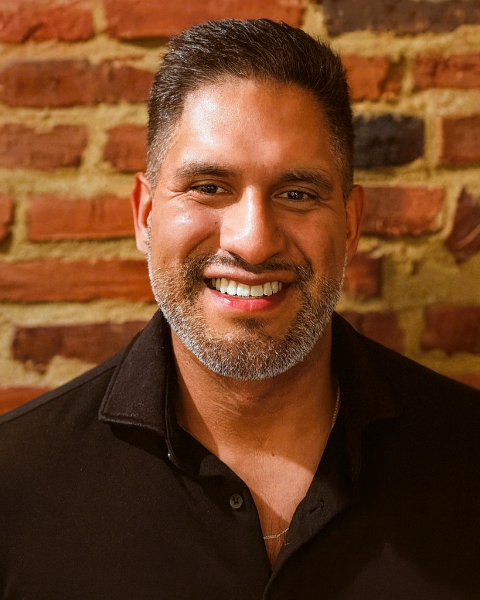
Albert Burgess-Hull, PhD
Founder & CEO
Addiction scientist and applied statistician with 15+ years of NIH/NIDA-funded research and prior experience deploying AI across 50+ outpatient SUD treatment sites.