
The Workforce Crisis in Addiction Medicine: The Numbers Behind the Access Gap
In 2024, 48.4 million Americans had a substance use disorder, and fewer than one in six received treatment – a gap that grew even as overdose deaths fell. Albert Burgess-Hull, PhD, walks through the numbers behind this paradox: a provider shortage regulation couldn’t fix, clinic economics that make growth nearly impossible, and unmeasured variability in how patients respond to treatment and how their clinicians are trained.
In our first post, I wrote that the biggest problem facing addiction medicine is not the treatments themselves – it’s the infrastructure surrounding care. Today I want to walk you through the evidence behind that claim, because once you see it, the conclusion becomes hard to ignore: the addiction treatment system is not simply underperforming. It is structurally incapable of meeting demand, and no amount of hiring, goodwill, or deregulation will change this on its own.
I want to start with the paradox. In 2024, 48.4 million Americans had a substance use disorder. However, during this time, fewer than one in six people received any treatment. Worse yet, the gap isn’t shrinking, it’s increasing. From 2023 to 2024, the percentage of untreated adults increased from 94.7% to 95.6%. This is all occurring while many treatments in addiction medicine work. Medications for opioid use disorder (e.g., methadone, buprenorphine) reduce craving, drug use, and mortality by 50–80%. Interestingly, overdose deaths fell roughly 27% in 2024, to just under 80,000, and preliminary data for 2025 suggest that they are continuing to fall. Even so, roughly 217 Americans still die from an overdose every day, and overdose remains the leading cause of death for adults 18–44. The paradox here is that overdose deaths fell during the same period that the treatment gap grew.
Hold those two facts side by side. Deaths are falling, yet the treatment gap is widening. This is not what a robust system looks like. It is what a system looks like when harm reduction efforts succeed downstream while the treatment delivery infrastructure remains broken upstream. Below, I discuss what is actually broken.
The Provider Shortage – and Why Deregulation Did Not Fix It
The United States has roughly 6,000 to 7,000 board-certified addiction medicine and addiction psychiatry physicians. Against 48.4 million people with a substance use disorder (SUD), that’s roughly one specialist for every 7,000 to 8,000 patients who need one. Forty percent of the U.S. population lives in a federally designated mental health shortage area, and the national average wait for behavioral health services is 48 days. Finally, more than half of rural counties have no buprenorphine prescriber at all.
You might think that training and licensing more people would solve this problem. However, this has already been tried on a national scale. In 2023, Congress eliminated the X-waiver – the federal rule required to prescribe buprenorphine – expanding the pool of eligible prescribers overnight from 130,000 clinicians to 1.8 million. What was the result of this policy change? Multiple studies have found that the number of patients actually receiving buprenorphine did not change and briefly even went down. In the end, fourteen times more clinicians were allowed to prescribe, yet the evidence suggests that the number of additional patients receiving buprenorphine treatment did not change one bit.
Meanwhile, addiction medicine fellowships (the training pipeline for new specialists) filled only about 65% of their available training slots last year. Whatever is constraining this field, it’s not regulation, and it’s not a shortage of training seats. It is something deeper and most likely related to how care gets delivered and paid for.
The Economics Make Growth Impossible
The economics of this field are dominated by a single line item: labor. This is the part of this crisis that I believe gets the least attention.
Addiction treatment is a labor business. In the federal government’s own evaluation of community behavioral health clinics, direct labor averaged 65% of total operating costs – and at individual clinics it ran as high as 89%. Place this against typical operating margins of 4–5%, with many safety-net clinics at breakeven or a loss, and the brutal economic reality of running a clinic becomes obvious. When labor is two-thirds or more of your costs and your margin is a rounding error, growth and clinic expansion become impossible.
Now add staff turnover. Counselor turnover in this field averages around 32% a year – triple the national workforce average – and reaches 50% in some settings. Replacing a single counselor costs roughly $35,000, and behavioral health wages have climbed 29% from 2020 to 2024 while reimbursement has not kept pace. A clinic operating at a 4-5% margin cannot absorb this. So clinics do the only things they can do to stay alive: cap their patient census, shorten visits, cut salaries, or close. Between 2023 and 2024, 126 hospitals shut down their inpatient psychiatric units, and behavioral health facility closures have continued at a steady rate since.
Two Kinds of Variability Impact Care Quality and Outcomes
The problems above constrain access to treatment. The problems below impact the quality, consistency, and effectiveness of the care patients receive.
Patients do not respond to addiction treatment uniformly, and these differences are not random. A growing body of research, including studies our team has contributed to, shows that patients follow a small number of distinct, identifiable treatment-response trajectories: some patients respond quickly and remain “stable” throughout treatment, some respond gradually over time, and some remain high risk throughout treatment. These patterns appear consistently across studies covering thousands of patients. For example, in our own forthcoming work, we identified four treatment-response subtypes among patients receiving buprenorphine for OUD, reflecting distinct patterns of opioid use and buprenorphine adherence during treatment: consistent treatment response, consistent nonresponse, gradual treatment response, and return to use.
The problem is that to our knowledge, no clinic in America can tell you which trajectory a patient is on until it is too late to matter. Standard practice at the point-of-care measures the things that are relatively easy to collect or quantify – e.g., urine drug screens or self-reported use, abstinence at 90 days, and craving. These data, even if they contain rich longitudinal detail, are typically collapsed to quantify a single point in time (e.g., drug use at a patient’s last appointment). Collapsing these data not only throws away information about a patient’s progress over time, but also conflates different patient subtypes. A patient who used daily for twelve weeks and stopped yesterday looks identical, on paper, to one who improved steadily the entire time. The signal that would flag a patient drifting toward dropout or overdose exists in the data. It is simply never used in clinical care.
The clinicians interpreting these data vary just as much. “Addiction counselor” sounds like a single role, but it is governed by more than 200 different credentials across the states. Depending on where a patient lives, the counselor treating a patient may hold a doctoral degree or a high-school diploma. Counterintuitively, the counselors with the most formal education are the least likely to have addiction-specific training, because graduate programs in social work and psychology rarely teach it. This variability also extends to the number of years a clinician or counselor has practiced in the field. As a result, a patient’s treatment plan depends not only on their clinical presentation, but also on the individual characteristics of their care team, including the amount of experience or training a provider has.
The take-home
The problems described above are not independent. Treatment access is constrained by a workforce that cannot grow to meet demand. The workforce cannot grow because clinic economics collapse under the cost of labor. Among patients who are able to access care, treatment quality hinges on unmeasured variation in both how a patient responds to treatment and how their clinician was trained. Each failure directly impacts the others, and all trace back to the same root: no modern medical specialty operates with less technological infrastructure than addiction medicine. The specialty facing one of the deadliest public health crises in American history has been left to run on outdated technology and clinical intuition.
That is the crisis in numbers. And it is precisely the crisis DeepCare Labs was founded to address. I spent six years building clinical AI systems inside Maryland’s largest outpatient addiction treatment provider, watching these issues limit what talented, committed care teams could deliver. Our team is building ATLAS – a clinical intelligence and workforce operating system – to address these problems directly. ATLAS extends specialist-grade clinical reasoning to the whole care team so that one supervising clinician can safely oversee a larger panel, while using digital twin models to match patients to the right care plan proactively instead of reactively. With ATLAS, we’re not trying to replace the specialist, we’re trying to put one in every room.
We will share much more about our work in the months ahead. If you run a treatment program, work in this field, or care about closing the treatment gap, we would like to hear from you.
– Albert
- Substance Abuse and Mental Health Services Administration. National Survey on Drug Use and Health (NSDUH), 2023 and 2024 annual reports.
- Health Resources and Services Administration. State of the Behavioral Health Workforce, 2025. December 2025.
- Centers for Disease Control and Prevention, National Center for Health Statistics. Provisional drug overdose death counts, 2024–2026.
- Wakeman SE, Larochelle MR, Ameli O, et al. Comparative effectiveness of different treatment pathways for opioid use disorder. JAMA Netw Open. 2020;3(2):e1920622.
- National Council for Mental Wellbeing. Behavioral health access and wait time data, 2025.
- Stone, Elizabeth M., et al. "Buprenorphine dispensation following X-waiver elimination by clinician specialty." American journal of preventive medicine (2025): 108055.
- Breslau J, Briscombe B, Dunbar M, et al. Preliminary Cost and Quality Findings from the National Evaluation of the Certified Community Behavioral Health Clinic Demonstration. ASPE/Mathematica, 2020.
- Pennsylvania Health Care Cost Containment Council. FY2023 financial analysis of psychiatric hospitals.
- Lightcast. Behavioral health advertised salary data, 2020–2024.
- SAMHSA, Center for Behavioral Health Statistics and Quality. SUD counselor turnover analysis (N-SSATS).
- American Hospital Association. Inpatient psychiatric unit closure data, 2023–2024.
- Hser YI, Huang D, Saxon AJ, et al. Distinctive trajectories of opioid use over an extended follow-up of patients in a multisite trial on buprenorphine + naloxone and methadone. J Addict Med. 2017;11(1):63–69.
- Eastwood B, Strang J, Marsden J. Continuous opioid substitution treatment over five years: heroin use trajectories and outcomes. Drug Alcohol Depend. 2018;188:200–208.
- Panlilio LV, Stull SW, Bertz JW, et al. Beyond abstinence and relapse: cluster analysis of drug-use patterns during treatment as an outcome measure for clinical trials. Psychopharmacology (Berl). 2020;237(11):3369–3381.
- Burgess-Hull AJ, Panlilio LV, Preston KL, Epstein DH. Trajectories of craving during medication-assisted treatment for opioid-use disorder: subtyping for early identification of higher risk. Drug Alcohol Depend. 2022;233:109362.
- Isvan N, Gerber E, Hughes R, Battis K, Anderson C. Review of SUD practitioner credentials across 50 states + DC. ASPE, 2019.
- Bouchery E, Dey J. Substance use disorder workforce staffing and education. ASPE Issue Brief, June 2018.
- Zerden L, Gaiser M, Daberko J, Ware O, Lombardi B. Understanding the graduate-level addiction counselor workforce. UNC Behavioral Health Workforce Research Center, 2025.
- U.S. Senate Finance Committee. Secret-shopper study of Medicare Advantage mental health provider networks. May 2023.
- NASADAD. The Substance Use Workforce Crisis: Drivers, Challenges and Promising Strategies. 2025.
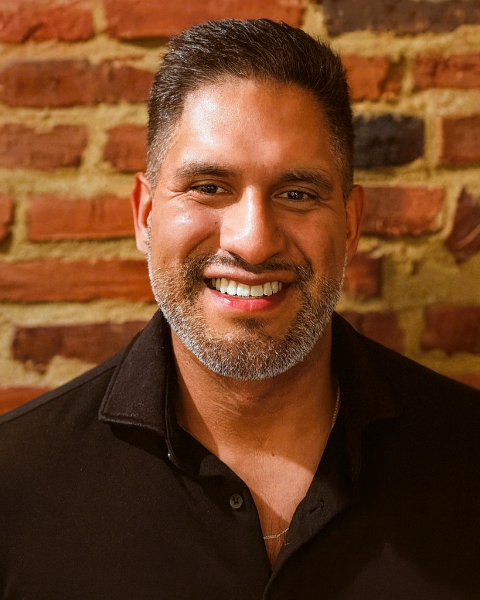
Albert Burgess-Hull, PhD
Founder & CEO
Addiction scientist and applied statistician with 15+ years of NIH/NIDA-funded research and prior experience deploying AI across 50+ outpatient SUD treatment sites.