
Trial and Error Is Not a Treatment Plan
Addiction medicine still treats patients by prescribing, waiting weeks, and adjusting only after a lapse or overdose. Albert Burgess-Hull, PhD, looks at what oncology, neurology, and autoimmune disease have built instead – computational frameworks that predict individual treatment response rather than reacting to it – and asks why addiction medicine hasn’t built the same infrastructure yet.
In my previous posts, I described the structural crisis facing addiction medicine – a nationwide provider shortage, clinic economics that make growth impossible, and high levels of variability in how patients respond to treatment and how their clinicians are trained. Today I want to address something more fundamental to patient care: the way treatment decisions are actually made in this field, and how far behind addiction medicine is compared to the rest of clinical medicine.
The standard approach to treating a patient with a substance use disorder (SUD) is, at its core, trial and error. A patient shows up for care. A clinician selects an initial treatment – typically a single medication that the provider has access to prescribe, determines a starting dose, and decides whether the patient might benefit from counseling. Then, everyone waits. If the patient improves, the clinician leaves the treatment as is. If the patient does not improve – or worsens – the plan is adjusted, and the waiting begins again. This approach is reactive and is grounded in a cycle of “wait-and-see” – prescribe, observe, and adjust only after observable changes in trend.
I don’t say this to criticize the clinicians or staff who have devoted their life to helping these patients. Care teams are operating within the constraints of a system that provides them very little to work with. But the consequences and danger of this approach deserve an objective discussion, because in addiction medicine, the cost of guessing wrong and waiting for a response can mean the difference between life and death.
The Problem with Reactive Care
Trial-and-error treatment is slow by definition. A clinician formalizes an initial treatment plan, waits weeks to assess response, and then decides whether to continue, adjust, or switch. Depending on the clinic, follow-up appointments might be spaced two to four weeks apart. If the initial plan doesn’t work, the adjustment cycle starts again. For a patient who is responsive from the beginning, this timeline might be ok. But for a patient who isn’t responsive, this readjustment cycle might extend for months before an effective plan is identified.
In most areas of medicine, this kind of delay is frustrating but manageable. In addiction medicine, it is potentially fatal. The illicit drug supply in the United States is now dominated by fentanyl and its analogues – synthetic opioids that are 50 to as much as 5,000 times more potent than heroin. Other novel and dangerous tranquilizers and opioids – such as Xylazine and Nitazenes – are also increasingly being detected in the illicit drug supply. Lapses during treatment are now more dangerous than ever due to these dangerous adulterants. In this environment, the longer the wait to find an optimal treatment plan, the higher the risk for adverse consequences including overdose and death.
This is what clinicians navigate every day, and it is what makes the reactive nature of current treatment protocols so consequential.
The Implicit Algorithm
It would be a mistake to say that addiction treatment currently lacks structure. It does have structure. The problem is that this structure was not designed for individualized treatment recommendations, nor was it designed to predict future risk.
The dominant framework governing addiction treatment in the United States is the ASAM Criteria – the American Society of Addiction Medicine’s multidimensional assessment and placement system. ASAM provides a structured method for evaluating patients across six dimensions and matching them to an appropriate level of care. Within each level of care, treatment follows a broadly sequential pattern: start with a first-line medication at a standard dose, adjust this dose based on clinical response, and escalate or change course if the patient does not improve. This is, in effect, an implicit clinical algorithm.
But this algorithm has several features worth commenting on. First, it is designed for the average patient. The ASAM Criteria itself was built by a consensus panel of experts drawing on evidence about the factors that influence clinical severity and prognosis. Medication guidelines are derived from randomized controlled trials designed to estimate average treatment effects. As a result, the protocol defaults – starting doses, titration schedules, monitoring intervals – are population-level recommendations. These protocols reflect what works for most patients most of the time (i.e., on average). They do not account for the substantial variation in how individual patients respond to treatment, variability that decades of research – including work our team has contributed to – has shown is not random but follows distinct patterns over time, and which is most importantly, predictable.
Second, this algorithm is constrained by policy as much as by evidence. Most prescribers in the United States have access to either buprenorphine or methadone, but rarely both. Methadone can only be dispensed through federally certified opioid treatment programs (OTPs). Buprenorphine can be prescribed in office-based settings but is subject to its own set of regulatory and practical constraints. This means that a patient’s treatment options are often determined by what medication their provider is able to prescribe which is dictated by what clinic they happen to visit.
Third, the algorithm’s failure mode is catastrophic. When a treatment plan doesn’t work, clinicians typically only learn about it after the fact: through a positive urine drug test, a missed appointment or dropout, or an overdose. This means that care teams often have to make consequential decisions based on lagging indicators, and sometimes only after the patient has disappeared or suffered a catastrophic outcome.
Addiction medicine is not a field that lacks talented clinicians. But it is a field that asks talented clinicians to make high-stakes decisions with inadequate tools, under time constraints where delays can be deadly, using protocols designed for a statistical average rather than the individual patient sitting in front of them.
What Other Specialties Have Built
The problems I have just described – patient variability, reactive decision-making, protocol defaults designed for the average case – are not unique to addiction medicine. Every complex chronic disease involves these complex clinical features. The difference is that other specialties have recognized these problems and have built the computational infrastructure to address them.
Consider what has happened in the neurodegenerative disorder field. Alzheimer’s disease was long treated as a homogenous condition, assumed to follow a single, predictable arc of cognitive decline. Researchers now know this is wrong. In 2018, a team led by Young and colleagues introduced an unsupervised machine learning framework called Subtype and Stage Inference – SuStaIn – that identifies distinct disease subtypes and stages individual patients along their own progression timeline using routine clinical data. Applied to Alzheimer’s, SuStaIn identified three neuroanatomical subtypes, each following a different spatial and temporal pattern of brain atrophy. This framework has since been extended to frontotemporal dementia, multiple sclerosis, schizophrenia, and chronic obstructive pulmonary disease. Using this methodological framework, the same phenotypic picture emerged: what appeared to be a single homogenous disease was actually comprised of several distinct subtypes following different trajectories.
In autoimmune disease, researchers have developed advanced models designed to extract meaningful disease trajectories from the noisy, irregular data that accumulates in electronic health records. One such model – the Probabilistic Subtyping Model (PSM) – when applied to scleroderma, was able to accurately predict which patients would rapidly decline and which would remain stable; information that could directly inform the decision of whether to initiate aggressive immunosuppressive treatment. Similar work in sepsis prediction led to the Targeted Real-time Early Warning System, which demonstrated that machine learning applied to thousands of clinical variables could identify patients headed toward septic shock well before traditional physiological indicators could flag the event.
Finally, in oncology, the translation of data-driven phenotyping methods to clinical application is perhaps the most advanced. Researchers have developed advanced digital twin architectures – computational models of individual patients that combine baseline records, genomic data, and longitudinal observations to forecast how each patient will progress under different treatment scenarios. These digital twins are now being used to optimize clinical trials, generating synthetic counterfactual control arm trajectories that reduce the number of participants needed for large clinical trials, and shortens drug development timelines. The European Medicines Agency has formally qualified the underlying statistical method for use in late-stage clinical trials, and the FDA has indicated it is consistent with current guidance.
The work described above represents precision medicine frameworks that have been actively deployed or are currently being evaluated through clinical validation. This research has fundamentally changed how clinicians and scientists in these specialties think about treatment response variability and treatment selection. The takeaway from this literature is straightforward: a disease that looks uniform at the population level is typically heterogeneous at the individual level. Furthermore, the data to characterize treatment response heterogeneity frequently exists in data repositories and clinical systems, and computational methods that have been developed and validated over the past decade can extract the patterns to make it actionable at the point of care.
It Is Now Addiction Medicine’s Turn
Addiction medicine has relied on trial-and-error treatment protocols for decades. This is understandable, because for most of the field’s history the computational methods were immature, the longitudinal datasets were unavailable, and the precision medicine infrastructure had not been built.
This is no longer the case. Advanced computational and statistical methods have been developed and validated. Methodological frameworks such as unsupervised clustering, data-driven disease progression models, and digital twin architectures have been fit to data from healthcare domains that share the core features of substance use disorders: chronic course, high inter-patient variability, fluctuating treatment response dynamics over time, and catastrophic consequences for delayed or mismatched treatments. The compute is available. The cost of training and deploying these models has fallen by orders of magnitude over the past five years. And the data exists. Large-scale real-world and clinical trial datasets – including the CTN-0094 harmonized dataset maintained by the National Institute on Drug Abuse – contain the longitudinal treatment records needed to develop and test these novel frameworks for substance use disorders.
Research from our team and others has already shown that patients with opioid use disorder do not respond to treatment uniformly. They follow a small number of distinct treatment-response trajectories – longitudinal patterns that are detectable early in treatment and that carry important information about optimal treatment intensity and future clinical outcomes. The scientific foundation for precision addiction medicine has been published, replicated, and is waiting to be operationalized.
The question all of us in the addiction field should now be asking is why hasn’t addiction medicine – the specialty confronting one of the deadliest public health crises in American history – built these frameworks? What is stopping us?
DeepCare Labs and Precision Medicine
DeepCare Labs was founded with a clear goal: to build advanced precision medicine frameworks capable of moving addiction treatment from reactive, trial-and-error care to proactive, data-driven individualized care. We believe that what oncology, neurology, and other fields have built over the past decade, addiction medicine must build now. We will continue to discuss this further in the coming months.
If you work in addiction treatment, invest in healthcare, or care about closing this gap, we would like to hear from you.
– Albert
- Substance Abuse and Mental Health Services Administration. National Survey on Drug Use and Health (NSDUH), 2023 and 2024 annual reports.
- Leen, J. L., & Juurlink, D. N. (2019). Carfentanil: a narrative review of its pharmacology and public health concerns: JLS Leen, DN Juurlink. Canadian Journal of Anesthesia/Journal canadien d’anesthésie, 66(4), 414-421.
- American Society of Addiction Medicine. The ASAM Criteria: Treatment Criteria for Addictive, Substance-Related, and Co-Occurring Conditions. 4th ed. 2024.
- Young AL, Marinescu RV, Oxtoby NP, et al. Uncovering the heterogeneity and temporal complexity of neurodegenerative diseases with Subtype and Stage Inference. Nat Commun. 2018;9(1):4273.
- Schulam P, Saria S. A framework for individualizing predictions of disease trajectories by exploiting multi-resolution structure. Advances in Neural Information Processing Systems. 2015.
- Schulam P, Saria S. Clustering longitudinal clinical marker trajectories from electronic health data: applications to phenotyping and endotype discovery. Proceedings of the AAAI Conference on Artificial Intelligence. 2015.
- Henry KE, Hager DN, Pronovost PJ, Saria S. A targeted real-time early warning score (TREWScore) for septic shock. Sci Transl Med. 2015;7(299):299ra122.
- He Z, Alexander DC, et al. A stage-aware mixture of experts framework for neurodegenerative disease progression modelling. arXiv. 2025;2508.07032.
- Chen R, et al. Temporally detailed hypergraph neural ODE for disease progression modeling. arXiv. 2024;2510.17211.
- Walsh JR, Smith A, Gong Y, et al. Generating digital twins with multiple sclerosis using probabilistic neural networks. arXiv. 2024.
- Unlearn AI. Prognostic Covariate Adjustment (PROCOVA): statistical methodology for digital twin integration in clinical trials. 2023.
- Hser YI, Huang D, Saxon AJ, et al. Distinctive trajectories of opioid use over an extended follow-up of patients in a multisite trial on buprenorphine + naloxone and methadone. J Addict Med. 2017;11(1):63–69.
- Panlilio LV, Stull SW, Bertz JW, et al. Beyond abstinence and relapse: cluster analysis of drug-use patterns during treatment as an outcome measure for clinical trials. Psychopharmacology (Berl). 2020;237(11):3369–3381.
- Burgess-Hull AJ, Panlilio LV, Preston KL, Epstein DH. Trajectories of craving during medication-assisted treatment for opioid-use disorder: subtyping for early identification of higher risk. Drug Alcohol Depend. 2022;233:109362.
- National Institute on Drug Abuse. CTN-0094 Harmonized Dataset for Treatment of Opioid Use Disorder.
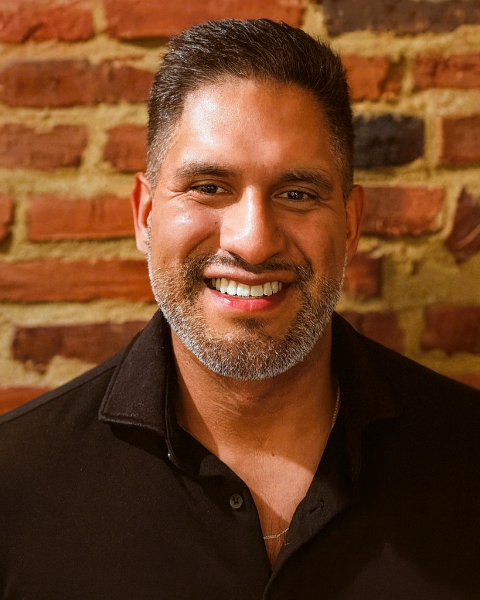
Albert Burgess-Hull, PhD
Founder & CEO
Addiction scientist and applied statistician with 15+ years of NIH/NIDA-funded research and prior experience deploying AI across 50+ outpatient SUD treatment sites.